

Amazon has blocked everyone’s agents, and it has many people thinking that now might be a good time to try to compete with them.

The most obvious threat is that existing rivals (especially Shopify and Walmart) can take share by being more willing to cooperate with agents.
Another proposal is a headless alternative that allows anyone to list inventory and accept payment from agents:

Amazon should be less worried than many people seem to think. To see why, it’s helpful to contrast their situation with industries that should indeed be quite worried about agents.
To see why, it’s helpful to contrast their situation with industries that should indeed be worried about agents.
Marketplaces do four jobs for their customers:
They help them search for products
They allow them to transact
They commoditize trust (e.g., with free returns)
And they handle fulfillment
Google can only do one of these jobs (search) before handing the customer off to a marketplace.
That was enough for them to earn most of the customer acquisition economics in any industry that doesn’t transact online: things like restaurant reservations or hiring local service professionals. Google earns more in these verticals than 3rd parties like Yelp or Angi.
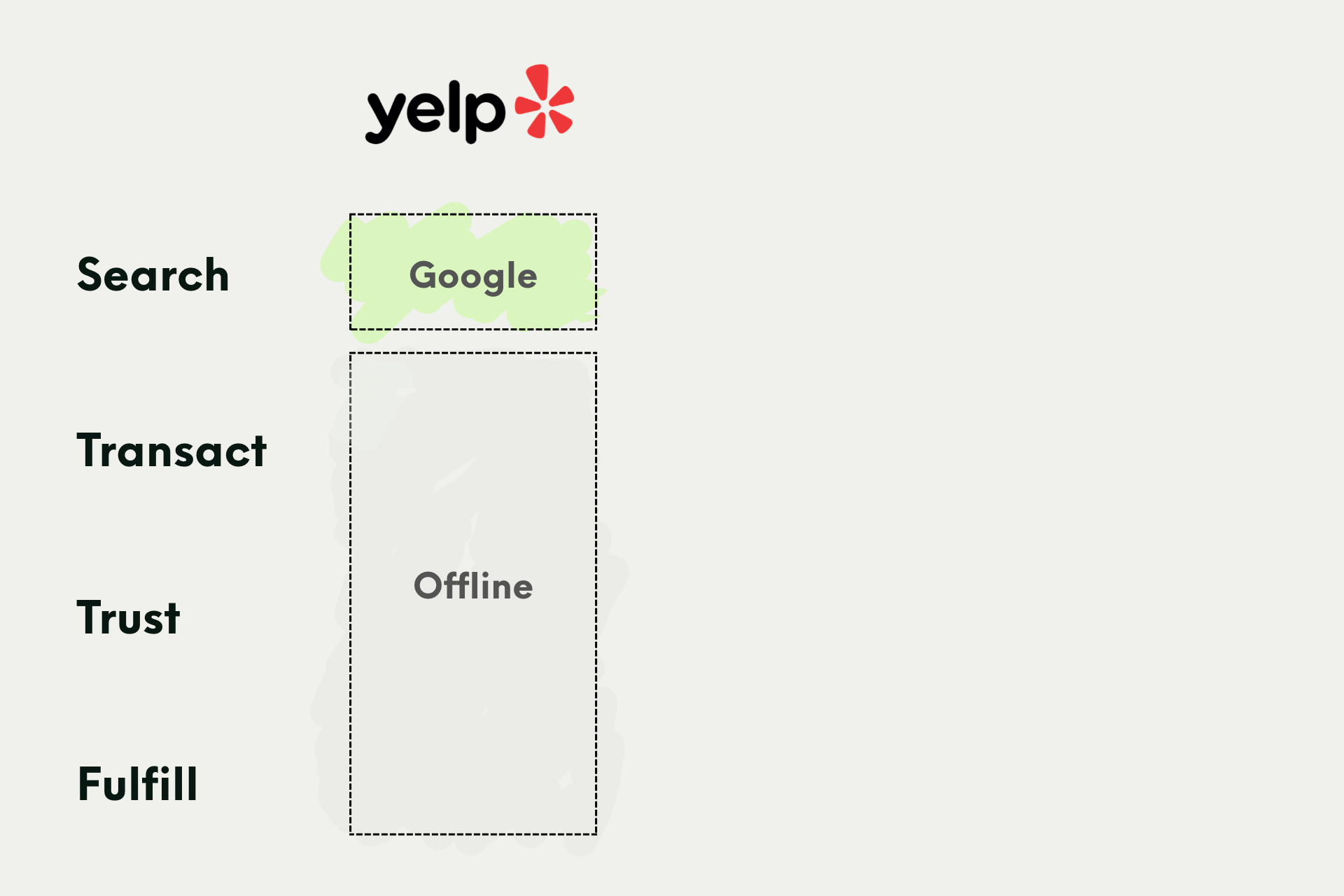
But agents can do a lot more than Google. They’re better at search (they understand more about what you want and can more readily iterate with you on it) and they can actually complete the transaction directly.
This means that there is a new class of industry that is at much higher risk of losing its profit pool than Amazon. That is anything that doesn’t need to commoditize trust or handle fulfillment.
Hotels are the best example. Hotel chains themselves own the trust function: they have the brand, they’ll refund your night if something goes wrong. And there is no fulfillment because you go to them.
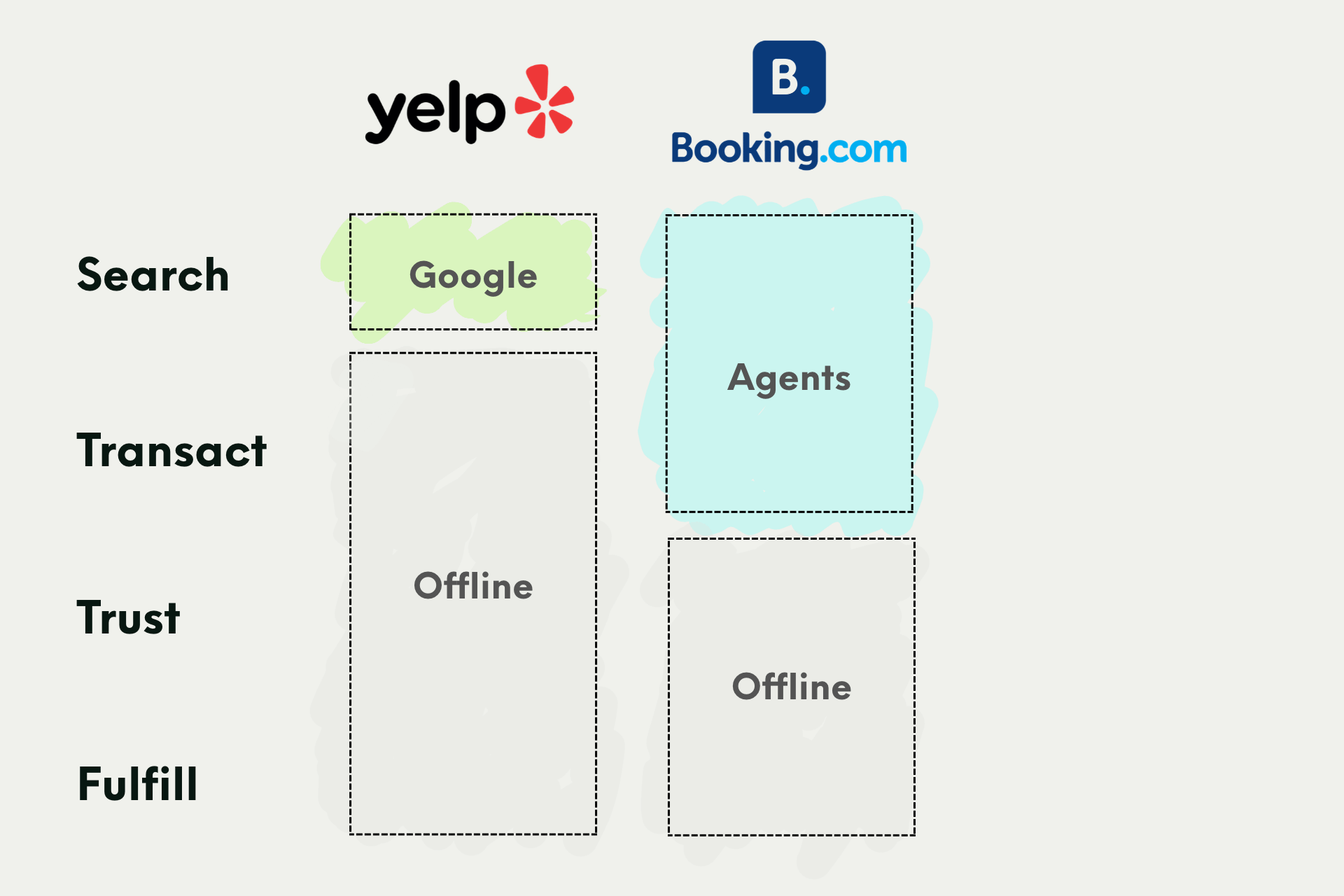
This is one reason that travel is the best near-term monetization opportunity for agents. I wouldn’t be surprised if Instinct, Muse, and others try to partner directly with hotels (and airlines) vs. going through marketplaces.
But most industries are not structured like this. Supply is more fragmented, quality is uneven and unreliable, and there is a messy last-mile logistics problem. You need a marketplace to handle those.
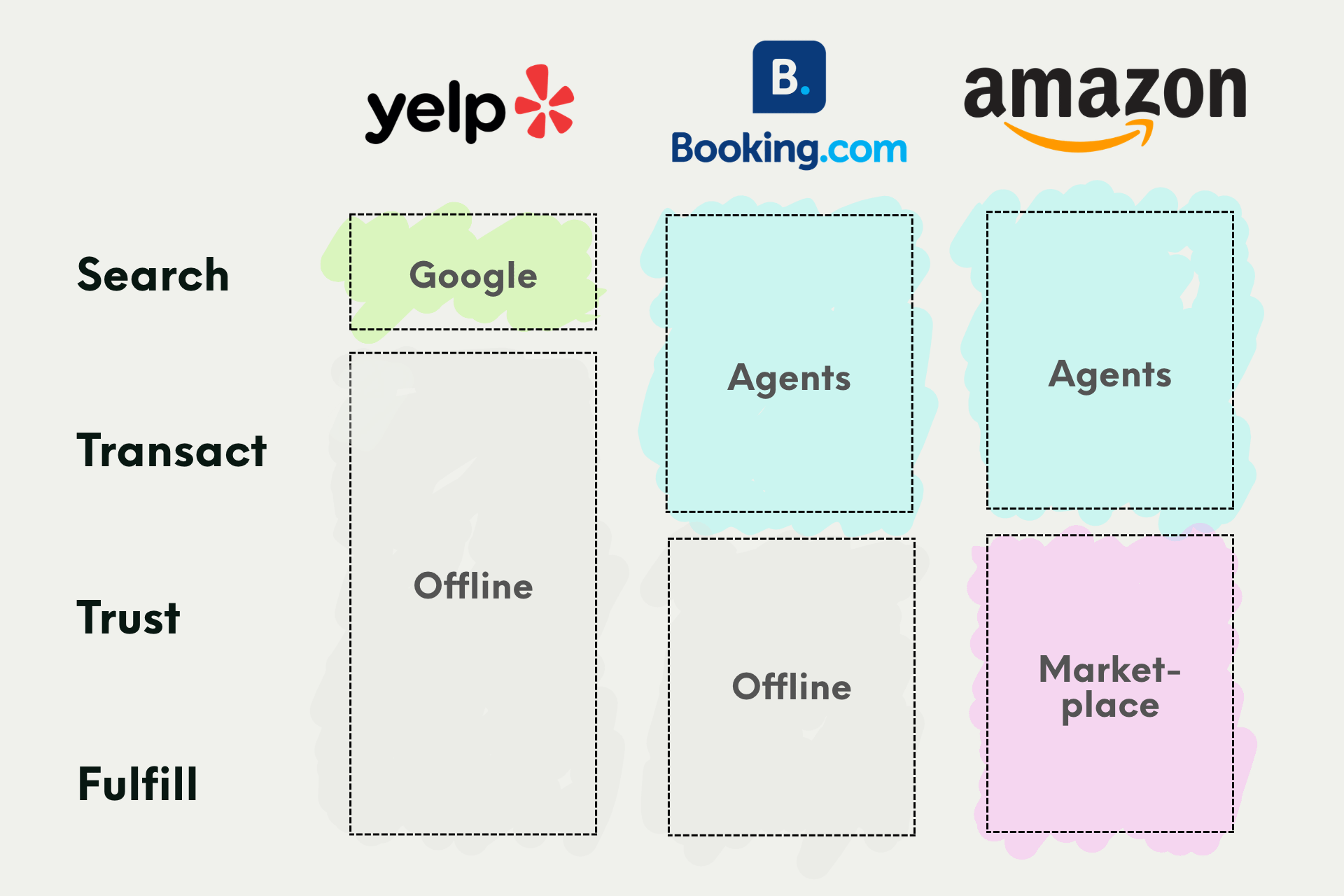
In these industries, walled gardens that pool resources to efficiently fund trust and logistics are the winning recipe. That’s the case for all of the most valuable marketplaces, including Amazon, Uber, and DoorDash.
It is true that Amazon earns a healthy commission AND makes a bunch of money on ads and up-sells. But they then plow it back into fast free shipping, free returns, customer service, supplier vetting, and many other things that customers want.
Without ads, Amazon’s ecommerce business runs at negative operating margins (as do Instacart and DoorDash). From a16z:
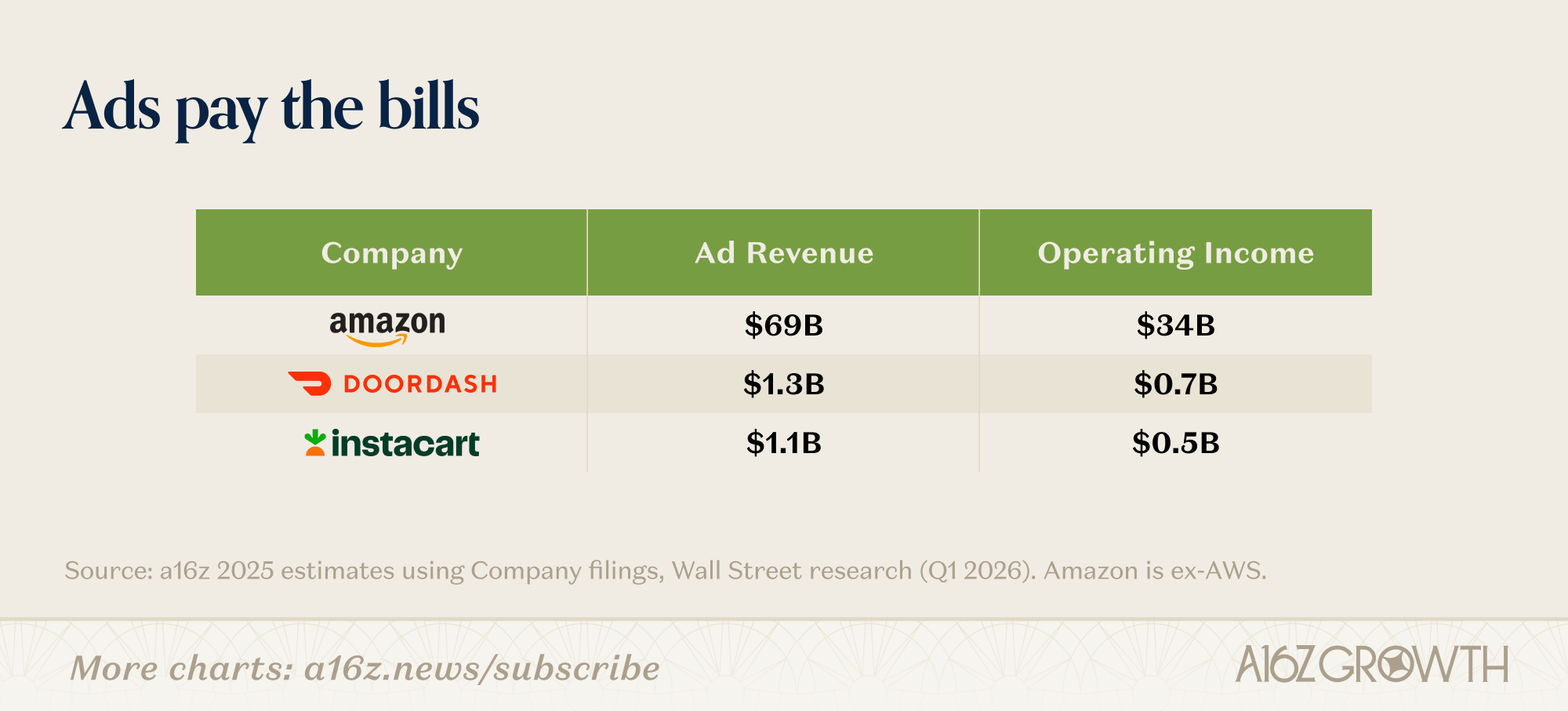
The revealed preference of most consumers is that they are happy to see some ads as long as they get fast free shipping and free returns in the bargain.
This is why headless won’t work. A network like this would need to work with FedEx or UPS, which would run less efficiently, and they’d still need their margin on top. It would also need a separate 3PL to handle warehousing and reverse freight and have to pay them a margin too. It just couldn’t get close on cost or speed.
What about Shopify? It is an incredible business: Shopify stores currently get about 14% market share to Amazon’s 40%. However, this is mostly a different segment of the market: typically more specialty, premium, discretionary purchases where customers are willing to accept higher prices and slower shipping. Only about 20% of Amazon’s inventory can be bought on a Shopify store today.
To break into Amazon’s core, Shopify would need to match on selection and convenience, which is very hard. Their effective take rate on GMV is only about 3%, compared to Amazon’s almost 30%, so they don’t have sufficient depth of monetization to fund the things a true managed marketplace can. They’ve tried and abandoned a logistics effort.
That leaves Walmart, which has by far the best opportunity to win incremental customers by playing nicer with agents. They currently have about 9% market share and much higher overlap with Amazon’s inventory. They already have a quite strong logistics operation, benefited by their store network.
Amazon’s response
Amazon knows all of this, of course. Blocking agents is still the logical thing for them to do right now. Agents don’t have much volume yet; they inject a lot of risk, and they would likely lower conversion rates and drive up returns. Most importantly, blocking agents gives Amazon leverage for future negotiations.
If agents do start to get real traction, Amazon will come to the table, and they are probably already working on it. They won’t just sit there and let Walmart or anyone else take share. This is what every marketplace does with every big new customer acquisition channel. They are in the business of aggregating demand, so they have no choice but to go where the demand is.
This could still hurt Amazon’s economics. They would be paying for transactions and not traffic, so they’d lose ad revenue. This will reduce the price they’re willing to pay, but probably not by enough to fully offset it.
If agents take off, they’re also just going to have to pay for more transactions than they do today. Only about 2-3% of Amazon purchases currently come from paid ads. That number will go up, particularly on high-consideration purchases where agents are very good at doing the research for you.
But this isn’t existential, because the market still needs walled gardens to provide the best mix of price, value, and convenience, and Amazon is by far the best walled garden ever built for commerce.
Their position gives them a lot of options to protect their economics. They could introduce a more expensive “Prime+” tier that allows agents, as Mike Vernal proposed. They could work with Meta and others to deliver ads inside the agent experience, as Ben Thompson proposed. They could pull a bunch of levers around pricing, free returns, and Prime eligibility to keep more routine repeat purchases on the marketplace.
They have a lot of options, and they ultimately have the most leverage, because in the end the stuff has to get to your house.
What this means for agents
One final question: will all of this enable agents to become good businesses?
That’s harder to say. But almost any consumer platform that gets massive adoption also ultimately finds a business model that works.
So if I were them, I’d be focused on adoption. And if you’re pitching an agent that can do anything for you, the most important prerequisite to widespread adoption is that it can, in fact, do anything. No one but the earliest adopters are going to put up with Muse or Grok Bot repeatedly telling you it can’t buy this or can’t book that.
They should start striking deals on friendly terms with every big marketplace, including Amazon, aiming for maximum coverage.
When they want to start monetizing more deeply, travel would be a good place to start. The founder of Instinct recently said it is ~half of their transaction volume. Once the adoption is really humming, they can come back to the table on e-commerce with more leverage.